


Tourism EXPO Japan 2026
San'inkaigan National Park/San'in Kaigan UNESCO Global Geopark
【San'inkaigan National Park】
Recommended for summer.
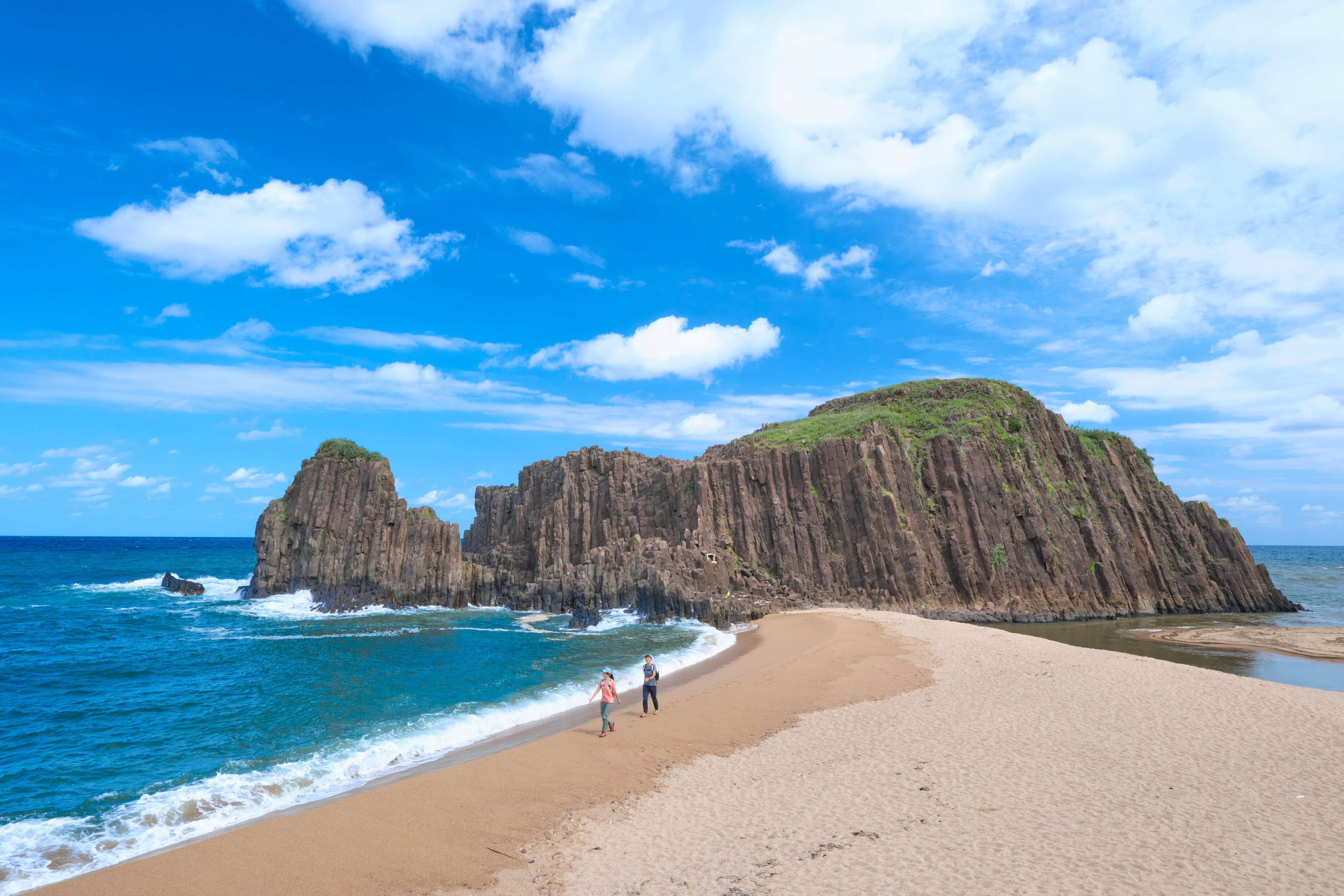
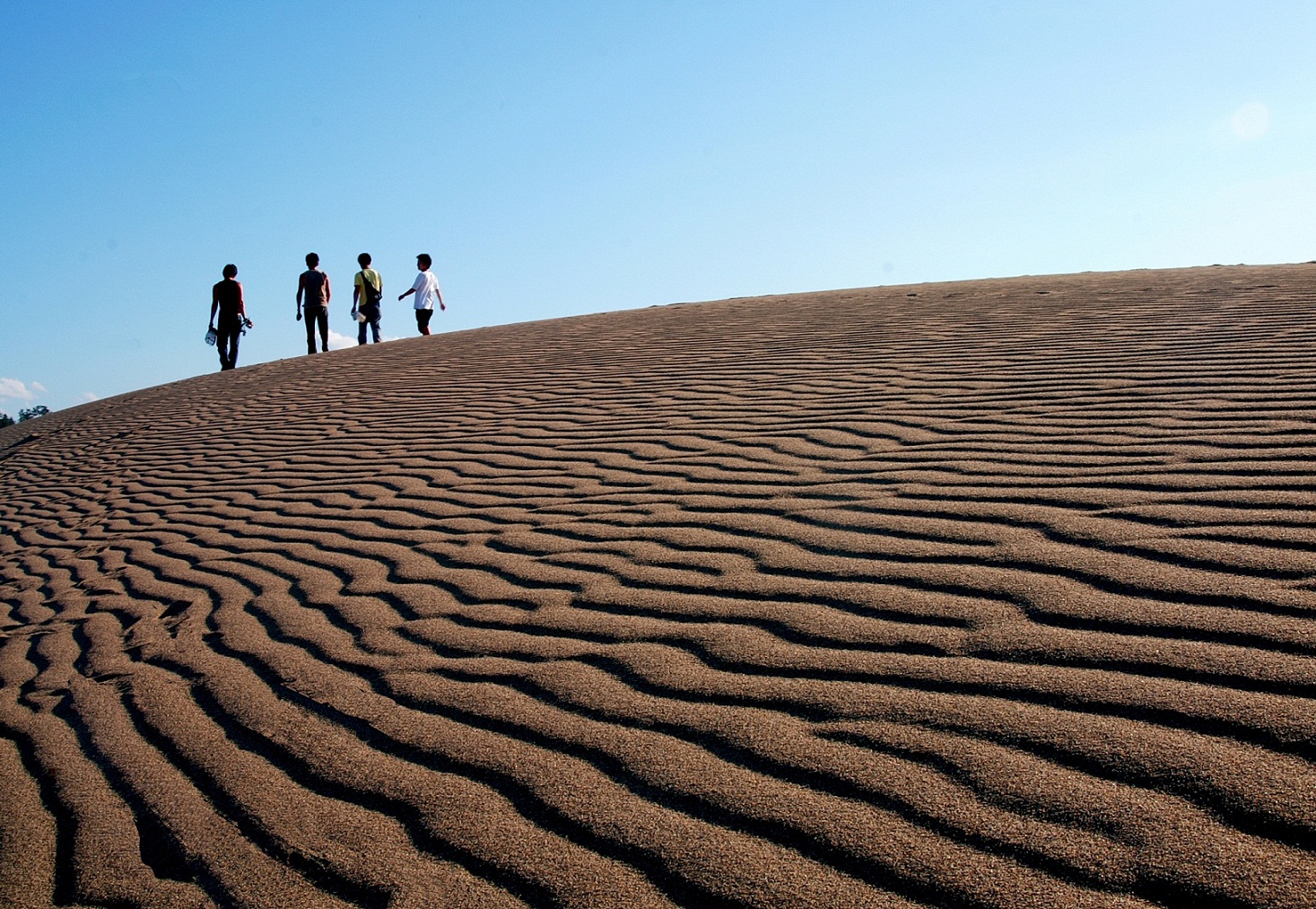
The San'inkaigan National Park comprises approx. 75 km of coastline stretching from Kyotango City, Kyoto Prefecture, in the west to Tottori City, Tottori Prefecture. The coastline is a ria coast (submergent coast) where the mountains connect to the ocean; it is characterized by its richly varying coastal landscape comprising landforms of sea cliffs, sea caves, and reefs that have developed significantly and merge with the ocean area. Another characteristic is the expansive sand dune landscape, represented by the Tottori Sand Dunes, that have been formed through wave erosion and by sand carried from river mouths. In this way, unique landforms can be seen throughout the national park, and because these landforms comprise various types of rocks, the park is also referred to as the "Geological Park" or "Beautiful Rock Park."
With the San'inkaigan National Park at its center, the San'inkaigan Geopark was admitted into the Global Geoparks Network in 2010, recognizing the global importance also of the San'inkaigan Coastline.
【San'in Kaigan UNESCO Global Geopark】
San'in Kaigan Geopark is a geologically significant area where visitors can learn about the formation of the Sea of Japan. It offers rich resources for educational travel and experiential tourism. Fieldwork programs that integrate geology, geomorphology, local culture, and disaster risk reduction align well with inquiry-based learning and SDGs education, making the geopark highly valued by school groups.
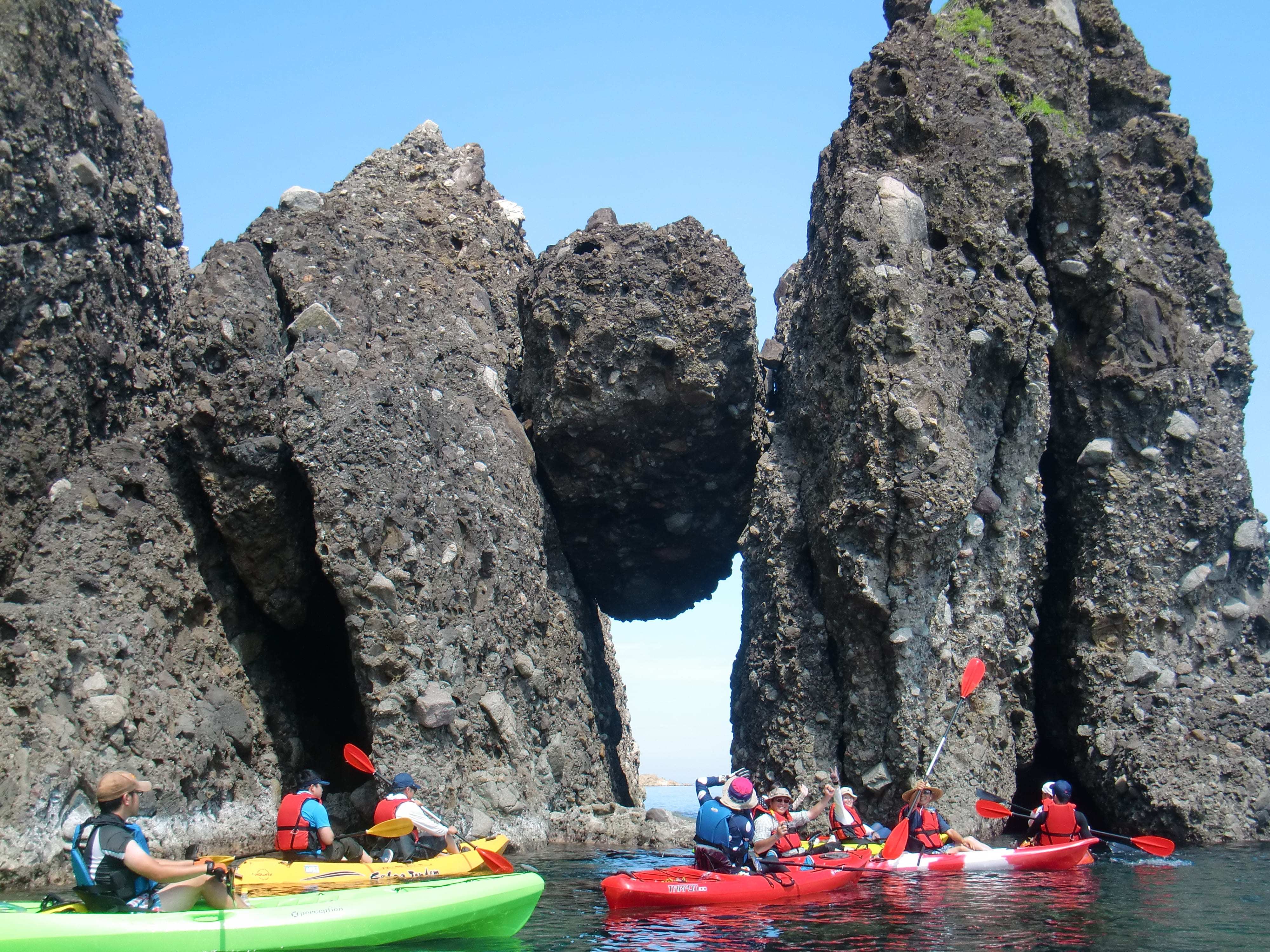
The geopark provides high-impact experiential programs such as guided geo-tours, coastal trails, rock observation, dune formation studies, and cultural activities. These can be tailored to various educational objectives. For inbound tourism, the geopark offers strong appeal through its photogenic coastal scenery, long-distance trails, and marine activities such as sea kayaking. Its location also supports multi-destination itineraries including Kinosaki Onsen, Amanohashidate, and the Tottori Sand Dunes. Since joining the Global Geoparks Network in 2010, the region has gained international recognition and is well-suited for developing products that combine educational travel, experiential tourism, and nature-based activities.
Recommended for summer.
The San'inkaigan National Park comprises approx. 75 km of coastline stretching from Kyotango City, Kyoto Prefecture, in the west to Tottori City, Tottori Prefecture. The coastline is a ria coast (submergent coast) where the mountains connect to the ocean; it is characterized by its richly varying coastal landscape comprising landforms of sea cliffs, sea caves, and reefs that have developed significantly and merge with the ocean area. Another characteristic is the expansive sand dune landscape, represented by the Tottori Sand Dunes, that have been formed through wave erosion and by sand carried from river mouths. In this way, unique landforms can be seen throughout the national park, and because these landforms comprise various types of rocks, the park is also referred to as the "Geological Park" or "Beautiful Rock Park."
With the San'inkaigan National Park at its center, the San'inkaigan Geopark was admitted into the Global Geoparks Network in 2010, recognizing the global importance also of the San'inkaigan Coastline.
【San'in Kaigan UNESCO Global Geopark】
San'in Kaigan Geopark is a geologically significant area where visitors can learn about the formation of the Sea of Japan. It offers rich resources for educational travel and experiential tourism. Fieldwork programs that integrate geology, geomorphology, local culture, and disaster risk reduction align well with inquiry-based learning and SDGs education, making the geopark highly valued by school groups.
The geopark provides high-impact experiential programs such as guided geo-tours, coastal trails, rock observation, dune formation studies, and cultural activities. These can be tailored to various educational objectives. For inbound tourism, the geopark offers strong appeal through its photogenic coastal scenery, long-distance trails, and marine activities such as sea kayaking. Its location also supports multi-destination itineraries including Kinosaki Onsen, Amanohashidate, and the Tottori Sand Dunes. Since joining the Global Geoparks Network in 2010, the region has gained international recognition and is well-suited for developing products that combine educational travel, experiential tourism, and nature-based activities.
Co-exhibitor of National Parks of Japan Ministry of the Environment
Akan-Mashu National Park :
Amamigunto National Park :
Aso-Kuju National Park/Kirishima-Kinkowan National Park :
Chubusangaku National Park :
Daisen-Oki National Park :
Ehime Prefecture Ishizuchi Mountains Ecotourism Promotion Council/Koshikijima Tourism Promotion Council/Yakushima Town Ecotourism Promotion Council :
Fuji-Hakone-Izu National Park :
Gero City Ecotourism Promotion Council/Izu Peninsula Geopark & Tourism Bureau/Nabari City Ecotourism Promotion Council/Higashiomi City Ecotourism Promotion Council :
Ise-Shima National Park :
Joshin’etsukogen National Park :
Kamiichi Machinowa Promotion Council/Toba City Ecotourism Promotion Council/Kyoto Miyama Tourism Association :
Keramashoto National Park/Iriomote-Ishigaki National Park :
Myoko-Togakushi renzan National Park :
Oze National Park / Nikko National Park :
San'inkaigan National Park/San'in Kaigan UNESCO Global Geopark :
Setonaikai National Park :
Shiretoko National Park :
Towada-Hachimantai National Park/Sanriku Fukko (reconstruction) National Park :
Yakushima (Island) National Park :
Yambaru National Park :
| Booth No | Y-37 |
|---|---|
| Area | Japan |
| Official site | https://sanin-geo.jp/english/ |
| SNS Links |    |
Photos